
How Edrans Built an Aligned Organization Across Five Continents.
What every CEO can learn from it.
A Hermann® case study. 11 years. One consistent message. One acquisition.
The problem no CEO talks about
Ask any CEO whether their team understands the company's strategic priorities. Almost all of them will say yes.
Then ask the team.
MIT researchers did exactly this across 124 organizations. They asked managers to list the three strategic priorities of their CEO. Ninety-seven percent said they knew them perfectly. Twenty-five percent could actually demonstrate it. A third couldn't name a single one.
Not in poorly managed companies. In organizations with CEOs who had been communicating the same priorities for years, through all-hands meetings, strategy presentations, leadership offsites, internal emails.
The problem wasn't lack of effort. It was something more fundamental: the human brain forgets 70% of new information within 48 hours. Hermann Ebbinghaus documented this in 1885, and no amount of corporate communication has changed it since. A quarterly all-hands doesn't create alignment. It creates an event. And events are forgotten in 48 hours.
What Javier D'Ovidio and Martín Bianco understood, perhaps intuitively, perhaps by necessity, when they founded Edrans in 2011 was that building a company across multiple geographies required something more than good communication. It required a system.
Who Edrans was, and what they were building
Edrans was an Argentine technology consultancy founded in Buenos Aires. As an Amazon Web Services Partner, the company held top-tier competencies for years, staying inside the small pool of AWS partners recognized globally as most capable. From its original base in Argentina, Edrans opened operations in London, Portland, Barcelona and Uruguay, and served clients across five continents. By the time of its acquisition by Netrix Global in 2022, the company had grown to 120 employees.
The challenge that comes with that kind of growth is not technical. The technical challenges have solutions: hire engineers, open offices, build processes. The harder challenge is keeping the organization coherent as it scales, making sure that the person hired in Portland in 2019 understands the same company, holds the same values, and makes decisions from the same frame of reference as the founders who started everything in Buenos Aires in 2011.
That challenge has a name: organizational alignment. And it is, according to McKinsey research across decades of data, one of the most powerful levers a company has. Organizations with strong alignment generate three times more total shareholder return than their competitors. The gap isn't marginal. It's structural.
The question for Edrans, as for any growing company, was how to build and sustain that alignment as the organization spread across time zones, languages, and cultures.
How it started: two founders on camera
The relationship between Edrans and Hermann®, then operating as Perra Films, goes back to 2011, when the company produced the first founder videos for Edrans: one with co-founder Javier D'Ovidio, the other with co-founder Martín Bianco.
At the time, this kind of founder-led storytelling was unusual for a company still early in its growth. Most technology companies at that stage were focused entirely on product and sales. The idea of investing in communicating who you are, before you had the brand recognition to justify it, was counterintuitive.
But the founders saw something that most companies their size weren't thinking about yet: the story of who you are and what you're building is not a marketing problem. It's a leadership problem. And if you don't solve it early, you solve it expensively later; in misaligned hires, in cultural drift, in the slow erosion of the founding vision as the company grows beyond the founders' direct reach.
"Our focus was on building a technical company," Javier D'Ovidio recalled. "Hermann® was able to translate what we had in our minds and turn it into a powerful message."
Martín Bianco added: "After seeing the final result, we understood this was an infinitely more powerful way to communicate, and from that moment we began a partnership of roughly 11 to 12 years."
The system that was built
What distinguished the Edrans collaboration from a typical client relationship was consistency over time.
Most companies treat communication as a project: launch a campaign, produce a video, run an all-hands. Each initiative lands once, generates some energy, and then fades. The Ebbinghaus forgetting curve does its work: within a week, most of what was communicated has been forgotten by most of the people who received it.
The three conditions Ebbinghaus identified for memory consolidation are spaced repetition, emotional load, and narrative. Information delivered in regular intervals, with genuine emotional resonance, and embedded in a story that can be followed over time; that information doesn't disappear. It compounds. It becomes conviction rather than data.
Edrans built a communication system around those three conditions. Not a one-off video series. Not a periodic campaign. A recurring cadence of audiovisual content, including an annual Brand Film, culture pieces, client case studies, and commercial content, that sustained the company's voice consistently across the full span of its growth.
The content did different jobs at different levels of the organization and outside it:
Internally, it gave every new hire, whether in Buenos Aires, London, or Portland, a direct experience of the company's culture, values, and leadership, without filtering through a manager's interpretation. The cascade problem in any hierarchy is mathematical: if the CEO communicates at 100% clarity, the first-level manager transmits roughly 40% of that, the next level 40% of that, and the execution team ends up with approximately 6.4% of the original message. The Edrans content system was a way to deliver the CEO's voice directly, bypassing the dilution of hierarchy.
Externally, it built a perception of the company that preceded every conversation. Talent researched the company before interviews and arrived already aligned with its culture. Clients knew who Edrans was before the first meeting. Potential partners had a formed image of the company before anyone picked up the phone.
"They're able to meet you exactly where you are, which is often an uncomfortable place," Javier D'Ovidio described of the process. "They ask a lot of questions you don't have answers to."
Martín Bianco: "Hermann® became another muscle of our organization, one that extracted that story and helped us keep building this platform to spread it."
One of eleven years of annual Brand Films — the recurring piece that gave the company a distinct character year after year.
It's not a luxury item. It's a necessity. We stopped seeing it as a cost when we started seeing the results.
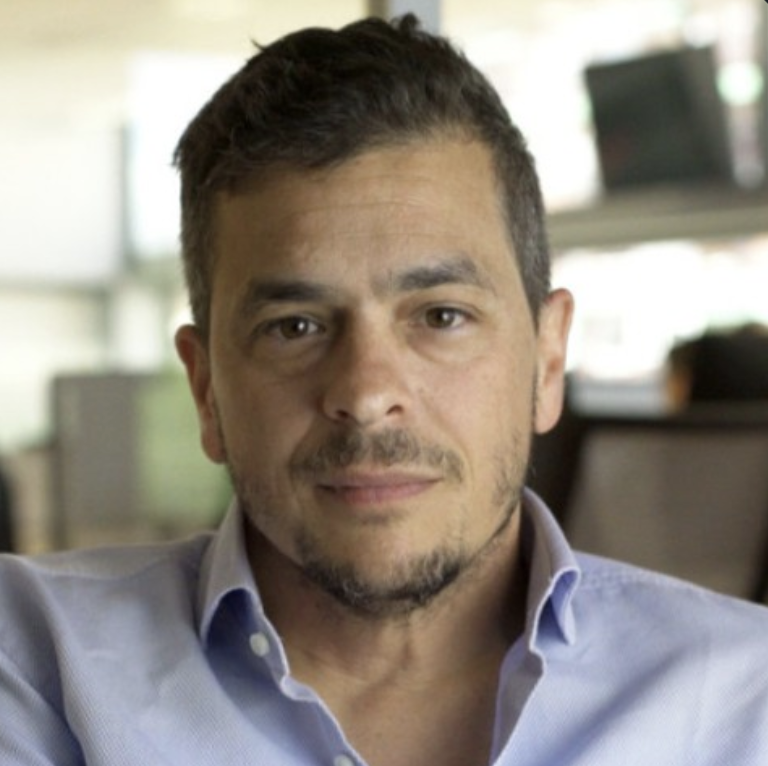
Martín Bianco
Co-founder, Edrans
The results: what organizational alignment looks like when it compounds
The outcomes Edrans experienced were not the result of any single video or campaign. They were the cumulative effect of consistent communication over more than a decade.
Talent acquisition. Candidates arrived at interviews already holding an accurate image of the company. They understood what Edrans did, what technologies it used, what projects it had carried out. "That became a magnet for talent," Martín noted. "People arrived already with an image, already with an understanding and enthusiasm, but above all it made the cultural fit so much easier." In an industry where mis-hires are expensive and cultural misalignment is a leading cause of attrition, this translated directly to lower recruitment costs and higher retention.
Market perception. Edrans' competitors were aware of the company's communication. Several reached out over the years wanting similar results. At industry events, competitors arrived with Edrans' videos on their phones, not as inspiration, but as the standard they were trying to reach. This is the compounding effect of consistent communication: the company became a reference point for others in its category.
Cultural coherence across geographies. As Edrans opened offices across multiple continents, the communication system traveled with them. New teams in London or Portland could access the same cultural touchstones as the founding team in Buenos Aires. The culture didn't dilute with distance; it was carried by the content.
The acquisition. In 2022, Edrans was acquired by Netrix Global. The same system that had been running since 2011 was still operating. The organizational clarity that Hermann® helped build over more than a decade was part of what the acquirer was buying: a coherent, well-articulated company with a recognizable culture and a team that understood what it was part of.
More from the Edrans archive
Beyond the annual Brand Film, the archive built with Edrans includes pieces that show different sides of the same compounding narrative.
A piece featuring Edrans' own people, showing the culture from the inside — including how the company treats mistakes.
A case study built with Edrans' client Zava, showing what Edrans helped them achieve and how.
A commercial produced for Edrans' technology migrations service, part of a series aimed at Edrans' own commercial pipeline.
Why most companies don't get here
Several of Edrans' competitors reached out over the years wanting the same result. Most weren't able to commit to the process long enough to let the messages compound.
This is the most common failure pattern. A company invests in communication when there's a catalyst: a rebrand, a fundraise, a new market entry; produces something strong, and then stops. The content lands. It generates some momentum. And then the forgetting curve takes over.
The problem is not the content. The problem is the cadence.
Gallup's most recent research on employee engagement shows that only 21% of employees globally are genuinely engaged with their work. The largest single factor cited by disengaged employees: insufficient clear and consistent communication from leadership.
The word that matters in that sentence is not "clear." It's "consistent."
One all-hands is not consistent. One brand video is not consistent. A quarterly newsletter is not consistent. What's consistent is a system that delivers the same message, in different forms, with genuine emotional resonance, embedded in an evolving narrative, in regular intervals, over enough time for it to consolidate from information into conviction.
Edrans committed to that. Most companies don't. Most companies treat organizational communication as an expense to be minimized rather than a lever to be optimized.
"We stopped seeing the initiative as a cost once we started seeing the results," Martín Bianco said. "It's not a luxury item. It's a necessity."
The lesson for any CEO building a company
The Edrans story is not about video production. It's about what happens when a leadership team, a CEO or a founder decides that communicating the company's vision is not a nice-to-have; it's infrastructure.
The MIT study showing that only 25% of managers can demonstrate knowledge of their CEO's strategic priorities is not an anomaly. It's the baseline. Most organizations are operating at roughly that level of alignment, most of the time, and accepting it as normal.
What Edrans demonstrated over 11 years is that the baseline is not fixed. A company that treats organizational communication as a system, with the same rigor it applies to product, to sales, to operations, can build something qualitatively different: a team where people at every level understand what they're building and why, where culture travels intact across geographies and org chart changes, where new hires arrive already oriented rather than needing months to understand what the company actually is.
"I'd recommend anyone have an experience with audiovisual storytelling," Martín said. "It drastically shortens the time it takes for people to understand who we are, what we do, and what value we bring to the table. For us, it was a genuine before-and-after. Even for my next projects, I'm completely clear on this now; it's not a nice-to-have, it's a necessity."
The question for any CEO reading this is not whether organizational alignment matters. The research on that is unambiguous: McKinsey's 3x TSR advantage, the Gallup engagement gap, the MIT study on strategic priority retention. The question is whether you have a system for it, or whether you're relying on events.
Events are forgotten in 48 hours. Systems compound.
Hermann® works with CEOs of companies above €20M in revenue who have something real to say to their organization. The process begins with a 4-hour extraction session. The system runs for 12 months.